
Have you received unsolicited emails claiming you have violated a copyright? Proceed very cautiously! Such scams are usually unsubstantiated claims based on vague allegations.
How Can You Spot A Scam?
Often these scammers state that they’re from a large company like Slack or Intuit. They’ll say there are images on your site for which they own the rights. They might also pose as freelance photographers claiming you stole their images. Often they will demand financial compensation, and they may include scary-looking U.S. codes and legal mumbo jumbo. Typically, they won’t offer any upfront examples of the images they’re claiming to own. Here are a couple of examples of these scam emails (use two fingers to enlarge them):
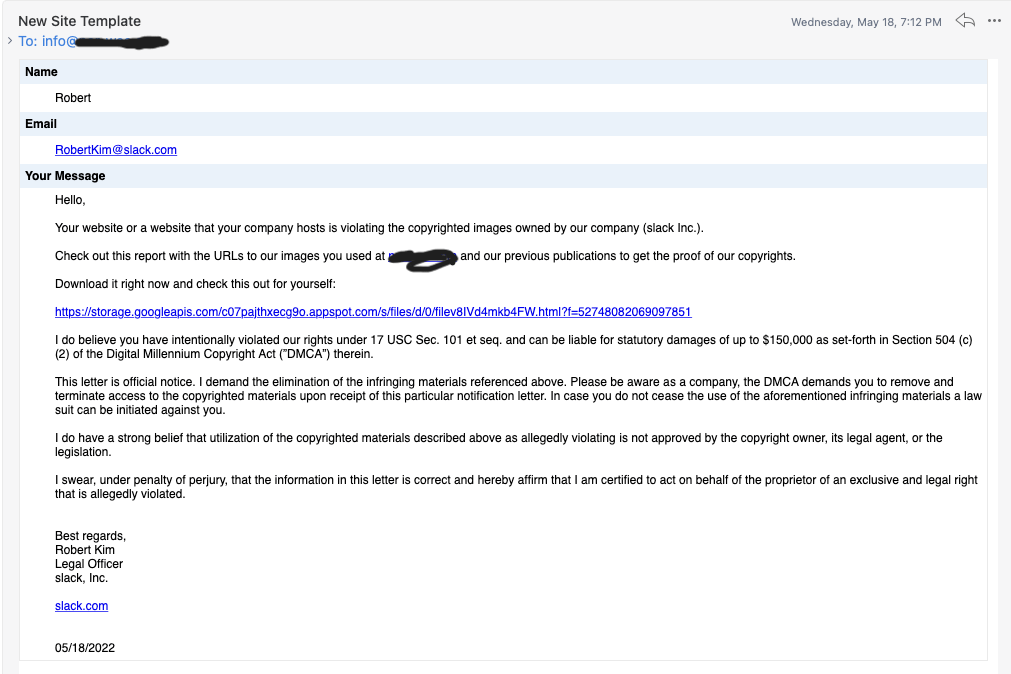
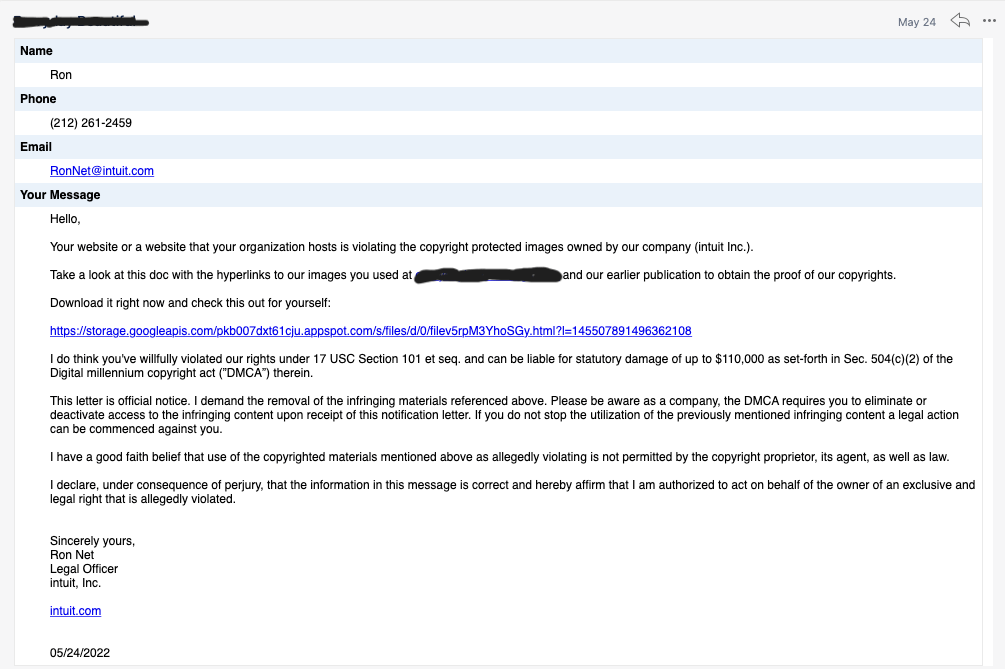
A legitimate copyright infringement notice is specific, not vague, and will reach out to discuss your intentions. Legitimate copyright holders would never threaten a recipient or use file storage servers. You should assume that any unsolicited emails, particularly those that threaten you, may contain dangerous links. NEVER click on a link in a threatening email!
How Should You Respond?
When these emails do include links, the senders usually tell you to click them to view examples of images you’ve “stolen.” Never click on these links! Doing so might download malware onto your computer, or have other malicious results, such as downloading content you have no right to use. If you download this content, the scammer may demand a settlement or payment, often in cryptocurrencies. Do not respond to threatening emails! (Often if you try to respond with an email asking for clarification, it will come back as undeliverable, because the email address doesn’t actually exist.)
How To Protect Yourself
Scam emails that threaten you with copyright infringement are becoming very common, as content is the lifeblood of every business. Social media pages, website pages, emails, and blogs all need images to be effective. The easiest and safest way to get images is to use a licensing stock image site. (All images used by Pegasus come from such a site.) Pulling photos from other locations on the internet can be a violation of copyright, and is absolutely NOT recommended! It can be difficult to find out who owns copyrighted materials – the best reason to use licensed stock – but ethical site designers never intentionally infringe on someone’s work. Cybercriminals are constantly finding new ways to manipulate email recipients, so be very careful if you receive an email from a mysterious source. If you have any concerns about an email you’ve received, let us know. We’ll be happy to investigate it for you.
